Home Career Human Resource Management Interview Dressing Tips for Freshers...
Read More

A decade ago, cybersecurity was a game of patience. Behind screens, logs flickered, waiting for red flags to pop up. Today, that game has changed completely. Attacks don’t trickle in anymore, they flood in, generated by machines, automated at scale, and evolving faster than any human team can track manually. This is exactly where AI in Cybersecurity has stopped being a buzzword and become the backbone of modern digital defense.
If you’re exploring a Cybersecurity Course or wondering whether an Ethical Hacking Course is worth your time in 2026, understanding how AI is reshaping this field isn’t optional anymore. It’s the difference between learning outdated tools and learning what the industry actually uses right now.

A few real-world applications show how deeply AI has embedded itself into security operations:
These are not experimental tools anymore. They are standard components in enterprise security stacks and that is exactly the reason why any serious Cybersecurity Training program now includes AI-integrated modules rather than teaching security as a purely manual discipline.

Here’s the part that should genuinely excite anyone considering Cybersecurity Careers: this shift hasn’t reduced job opportunities, it has multiplied them. Someone still has to train these AI models, interpret their outputs, fine-tune false positives, and make the final judgment calls that machines can’t. The industry needs humans who understand security fundamentals and AI-powered tools.
This is creating an entirely new category within Information Security Careers, roles that didn’t exist five years ago:
If you’re building Cybersecurity Skills for the next decade, this is the direction to build them in.
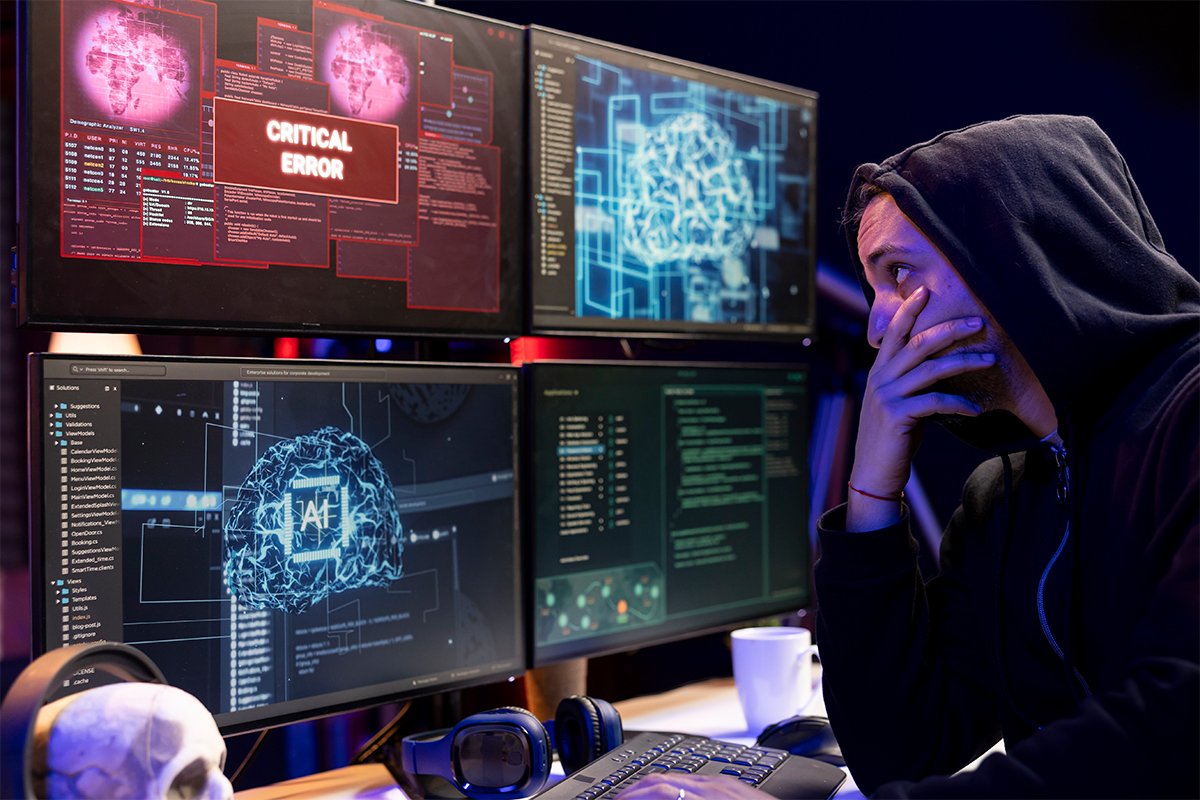
There’s a common myth around us , that AI might replace ethical hackers. In reality, it’s doing the opposite, it’s raising the skill ceiling. AI can automate repetitive scanning and pattern recognition, but exploitation of a truly new vulnerability still requires human creativity and intuition. What’s changed is the toolkit. A modern Ethical Hacking Course today isn’t complete without teaching students how to use AI-assisted reconnaissance, automated exploit generation, and machine-learning-based fuzzing tools alongside traditional penetration testing methods.

Kerala’s IT and tech ecosystem has grown rapidly, and demand for trained security professionals is following the same curve. If you’re searching for a Cybersecurity Course in Kerala, look beyond course duration and fees. Ask whether the curriculum includes AI-based threat detection labs, hands-on ethical hacking simulations, and guidance toward recognized Cybersecurity Certification. A good Training Institute should be preparing you for the job market as it exists today, not as it existed five years ago.

The Future of Cybersecurity isn’t humans versus machines. It’s humans directing machines with precision. AI handles scale and speed; humans handle judgment, ethics, and strategic thinking. Professionals who understand this collaboration, who can read AI-generated alerts critically, fine-tune detection models, and still think like an attacker when needed, will be the ones leading security teams in the years ahead.

Cybersecurity isn’t about firewalls and passwords any longer. It’s about mastering a system where intelligent machines and skilled humans work in tandem. Whether you’re a student weighing your first tech career move or a working professional looking to upskill, now is the moment to build expertise that combines both worlds, and Dsoft is where that journey starts.
The threats are getting smarter. It’s time your skillset did too.
1. Will AI replace cybersecurity jobs?
No.It’s multiplying them. AI handles scale and speed; the industry still needs trained humans to interpret alerts, fine-tune models, and make judgment calls machines can’t.
2. Is coding experience required to get started?
Not necessarily. A good Cybersecurity Course builds you up from fundamentals — networking, threat detection, ethical hacking basics — regardless of your starting point.
3. What makes a course “future-ready” in 2026?
AI-integrated labs, hands-on ethical hacking simulations, and a certification path that employers actually recognize , not just theory-heavy modules.
4. Is 2026 a good time to start a cybersecurity career?
If you’re a student or professional watching AI reshape every industry, cybersecurity is one of the few fields where AI is creating more demand for skilled humans, not less.
Sivajith Sivan
Content Writer
D Soft Institute
Home Career Human Resource Management Interview Dressing Tips for Freshers...
Read MoreHome Technology 7 IT Skills for Jobs That Boost Your...
Read More
. Simplifying Hospital Operations Management
One of the biggest causes of patient frustration is inefficiency- long queues, delayed discharge, misplaced records, or confusing billing. Administrators improve this by optimizing hospital operations management: redesigning patient flow, digitizing records, coordinating between departments, and removing bottlenecks that waste patients time. A well-managed patient journey, from admission to discharge, is often the single biggest driver of satisfaction scores. Streamlining operations remains one of the most impactful Hospital Administrator Responsibilities in any healthcare facility.
2. Training and Empowering
Staff Administrators set the vocal for how staff interact with patients. By organizing regular training on communication, empathy, and cultural sensitivity, they ensure that every highlights- from the receptionist to the discharge nurse; reflects patient-centred healthcare values. Empowered staff who feel supported by management are far more likely to treat patients with warmth and patience. Staff training and supervision are core Hospital Administrator Responsibilities that shape day-to-day patient interactions.
3. Managing Facilities and Environment
Cleanliness, comfort, wayfinding, and safety all fall under administrative oversight. Simple upgrades like clearer signboards, comfortable waiting areas, and faster housekeeping response times significantly influence how patients perceive their care, even before a doctor sees them.
4. Handling Complaints and Feedback
Loops Improving patient satisfaction in hospitals requires a system, not guesswork. Administrators build structured channels- feedback kiosks, post-discharge calls, digital surveys- to capture patient voices and act on them. Effective patient experience management means closing the loop: identifying recurring issues and fixing root causes rather than offering one-time apologies. Managing this feedback loop is one of the most patient-facing Hospital Administrator Responsibilities.
5. Bridging Technology and Care
From appointment scheduling apps to electronic health records, administrators drive the adoption of technology that reduces friction. A patient who can book a slot online, receive automated reminders, and access reports digitally experiences far less stress than one navigating paper-based systems.
6. Financial Transparency and Billing Clarity
Confusing bills are a top complaint in hospitals worldwide. Administrators who standardize billing processes, offer transparent cost estimates, and train billing staff to explain charges clearly prevent unnecessary anxiety and disputes, building long-term trust.
7. Coordinating Cross-Department Communication
Patient experience often suffers when departments fail to communicate- a lab report delayed, a referral lost, or a discharge summary not shared with pharmacy. Strong administrators create protocols that ensure seamless coordination across departments, so patients don’t have to repeat their history five times or chase down their own reports. Cross-departmental coordination is often cited as one of the most underrated Hospital Administrator Responsibilities.
Home Career Human Resource Management Interview Dressing Tips for Freshers...
Read MoreHome Technology 7 IT Skills for Jobs That Boost Your...
Read More